Flash sale
save
20%

SHARE THIS ARTICLE




A data breach is an intentional act of unauthorized access to sensitive information with malicious objectives, while a data leak is the unintentional exposure of sensitive data due to internal human errors, oversight, or poor security configuration

The terms data breach and data leak are often used interchangeably, but they are not the same. A data breach is an intentional act of unauthorized access to sensitive information with malicious objectives, while a data leak is the unintentional exposure of sensitive data due to internal human errors, oversight, or poor security configuration.
Data breaches in cybersecurity occur through cyberattacks where an attacker actively breaks into systems to steal, copy, or ransom data whereas data leaks frequently result from human errors or security misconfigurations. It is important to understand differences, causes, and implications for both data security incidents so that one is prepared to handle these incidents when they happen.
In this blog, you will understand the key difference between data breach and data leak and how to prepare for them.
A data breach is a security incident in which sensitive, confidential, or protected information is accessed, disclosed, acquired, or otherwise compromised without authorization. It is an intentional act of accessing information by an unauthorized user with a malicious intent.
Data breaches can occur when cybercriminals exploit security vulnerabilities, steal login credentials, or gain unauthorized access to company systems. However, not every breach involves a cyberattack. Accidental disclosures, employee mistakes, and misuse of legitimate access privileges can also result in data breaches.
Example: A cybercriminal obtains an employee's login credentials through a phishing attack and uses them to access a company's customer database containing personal information.
Depending on the circumstances, a data breach may expose personal information, financial records, intellectual property, or confidential business documents.
Data breaches can be categorized according to how unauthorized access or disclosure occurs.
Hacking and system Intrusions: Attackers exploit security vulnerabilities or compromised credentials to gain unauthorized access to systems, databases, or networks.
Malware and ransomware attacks: Malicious software compromises systems, potentially allowing attackers to access, steal, or expose sensitive information. Ransomware incidents may also involve data theft, although not every ransomware attack results in data exfiltration.
Insider-related breaches: Employees, contractors, or other authorized users intentionally misuse access privileges or accidentally disclose protected information.
Physical theft or loss: Lost or stolen laptops, storage devices, or physical records can result in a breach when protected information is exposed or compromised.
A data leak occurs when sensitive or confidential information is exposed or disclosed unintentionally with no malicious intent to an unintended or unauthorized party.
Data leaks commonly result from human errors, improperly configured cloud storage, incorrect file-sharing permissions, or employees sharing confidential information through unsecured channels. They can also involve deliberate disclosures by individuals with access to sensitive data.
Unlike incidents involving attackers who actively compromise a system, some data leaks occur without anyone bypassing security controls.
Example: An employee accidentally changes the sharing permissions of a confidential company folder, allowing anyone with the link to access its contents.
A data leak does not necessarily establish that an unauthorized person has accessed or downloaded the exposed information. However, the exposure itself can create security risks and, depending on the circumstances, may constitute a reportable data breach.
Data leaks can be classified by the circumstances in which sensitive information becomes exposed or disclosed.
Accidental data leaks: Employees unintentionally disclose sensitive information by sending emails to incorrect recipients, sharing the wrong files, or publishing confidential documents.
Cloud and system misconfigurations: Incorrect access permissions, publicly accessible storage, or insecure system configurations expose information to people who should not have access.
Insider data leaks: Employees or other authorized individuals deliberately disclose, copy, or share confidential business information without permission.
Third-party data leaks: Sensitive information becomes exposed through external vendors, service providers, or business partners responsible for handling organizational data.
These categories are not mutually exclusive. For instance, a third-party data leak may result from an accidental cloud storage misconfiguration.
The primary difference between a data breach and a data leak lies in how sensitive information is compromised or exposed. A data breach typically involves unauthorized access or disclosure where an attacker is intentionally trying to break into systems, whereas a data leak commonly involves unintentional exposure of sensitive data or information becoming accessible with unintended parties with no malicious actor trying to break in.
However, the distinction is not absolute. A data leak may also qualify as a data breach, depending on the circumstances.
Basis of Comparison | Data Breach | Data Leak |
Meaning | Unauthorized access, disclosure, acquisition, or compromise of protected information. | Exposure or disclosure of sensitive information to unintended or unauthorized parties. |
Intent | May result from malicious attacks, insider actions, or accidental disclosures. | Often accidental, but can also involve deliberate disclosure. |
Common Causes | Credential theft, cyberattacks, unauthorized access, and security failures. | Human error, incorrect sharing permissions, system misconfigurations, and unauthorized sharing. |
Unauthorized Access | May involve confirmed or reasonably suspected unauthorized access or disclosure. | Information may be exposed even without evidence that an unauthorized party accessed it. |
Typical Scenario | An attacker uses stolen credentials to access confidential customer records. | A cloud storage folder containing confidential files is accidentally made publicly accessible. |
Relationship | Can arise from a data leak or include unauthorized disclosure of information. | Can constitute a data breach when the exposure meets the applicable breach criteria. |
Yes. The two terms are not mutually exclusive.
For example, suppose an employee accidentally sends a spreadsheet containing customers' personal information to an unauthorized recipient. The incident can be described as a data leak because information was disclosed to an unintended party. It may also constitute a personal data breach because protected information was disclosed without authorization.
Similarly, a publicly accessible database represents a potential data leak. If an attacker discovers it and downloads confidential records, the incident involves both exposure and unauthorized acquisition.
A data leak describes the exposure or disclosure of information, while a data breach concerns a security compromise involving protected data. The same incident can fall into both categories, and a breach does not necessarily require a deliberate cyberattack.
Understanding how these incidents occur in real-world situations makes it easier to distinguish between a data breach and a data leak. The following examples illustrate different scenarios involving sensitive business information.
A company stores confidential employee records in a cloud storage folder. An IT administrator accidentally configures its permissions to allow public access.
Although the records are now accessible to unauthorized individuals, there is no evidence that anyone outside the organization has viewed or downloaded them.
Why is this a data leak? The information has been exposed because of incorrect access permissions, even though unauthorized access has not been confirmed. Depending on the applicable legal definition and circumstances, the exposure may also constitute a data breach.
An employee falls victim to a phishing attack and unknowingly reveals their login credentials. A cybercriminal uses those credentials to access the company's customer database and download personal and financial information.
Why is this a data breach? The attacker gained unauthorized access to protected information and acquired confidential records. The incident involves a confirmed compromise rather than exposure alone.
An HR employee accidentally emails a spreadsheet containing employees' names, addresses, salary details, and other personal information to an external recipient instead of the intended manager.
The recipient was not authorized to receive the information, even though the disclosure was unintentional.
Why can this be both? The incident is a data leak because confidential information was shared with an unintended recipient. It may also qualify as a personal data breach because the information was disclosed without authorization.
These scenarios demonstrate that the classification depends on what happened to the information, whether unauthorized access or disclosure occurred, and the applicable security or legal definition.
Data breaches and data leaks often result from a combination of technical vulnerabilities, human errors, and inadequate security practices. While the incidents may occur differently, several underlying weaknesses can increase the risk of both.
Weak passwords, shared accounts, excessive user permissions, and inadequate authentication make sensitive information more vulnerable to unauthorized access.
For example, employees with access to confidential records beyond their job requirements may unintentionally expose information or misuse their privileges. Similarly, accounts without multifactor authentication can be easier to compromise when credentials are stolen.
Security flaws in applications, operating systems, and network infrastructure can provide opportunities for attackers to access protected information.
Organizations that delay security patches or continue using unsupported software may leave known vulnerabilities exposed. Attackers can exploit these weaknesses to compromise systems and access sensitive data.
Employees regularly handle confidential documents, customer information, and internal business records. Without sufficient security awareness, mistakes in handling this information can lead to unintended disclosures.
Employees may also struggle to recognize phishing attempts, suspicious attachments, or fraudulent requests for sensitive information, increasing the likelihood of compromised accounts and unauthorized access.
Incorrectly configured cloud services, insecure databases, and poorly managed file-sharing permissions can expose sensitive information.
The risk increases when organizations lack clear data classification policies, maintain unnecessary copies of confidential records, or fail to review who can access sensitive information.
Not every security incident originates outside an organization. Employees, contractors, and other authorized users may deliberately misuse their access to confidential information.
Motivations can include financial gain, personal grievances, or unauthorized use of company information. Such incidents are particularly difficult to identify when organizations have limited visibility into access to sensitive systems and data.
Organizations frequently share information with cloud providers, contractors, software vendors, and other external partners. Weak security practices at these organizations can expose data even when the business that owns it has appropriate internal controls.
Excessive third-party permissions, insecure integrations, and insufficient oversight of vendor security practices can increase the risk of unauthorized access or disclosure.
“Read more: What is Employee Monitoring Software and How Does It Work?
Remote and hybrid work environments can increase the risk of data leaks because employees access, store, and share sensitive business information outside traditional office networks. Working across different locations, devices, and cloud-based platforms creates additional security challenges, particularly when organizations lack consistent controls over how company data is handled.
Several factors contribute to this increased exposure:
Employees may access confidential documents using personal laptops, smartphones, or other devices that are not centrally managed by their organization's IT team. These devices may lack enterprise security configurations, increasing the risk of unauthorized access or unintended data exposure.
Remote employees often connect through home Wi-Fi or public networks in cafés and coworking spaces. Poorly secured networks can expose data transmissions to interception, particularly when connections lack appropriate encryption and authentication.
Distributed teams rely heavily on cloud storage, messaging applications, and file-sharing platforms. Incorrect sharing permissions, publicly accessible links, or accidental file transfers can expose confidential information beyond intended recipients.
Using personal email accounts, cloud storage, or unauthorized applications for work can move sensitive information outside approved company systems. This makes it harder to control access, enforce data protection policies, and investigate potential disclosures.
When employees work across multiple locations and devices, IT teams may have limited visibility into where company information is stored, who can access it, and how it is shared. This can delay the identification of inappropriate data transfers or exposed files.
Remote and hybrid work do not inherently cause data leaks. The risk largely depends on how organizations manage devices, remote access, information sharing, and security policies across distributed environments.
“Read more: Remote Work Challenges Solved with Employee Monitoring Software
Preventing data breaches and data leaks requires a combination of technical security controls, employee awareness, and clearly defined data protection policies. Organizations should focus on limiting unauthorized access, protecting sensitive information, and detecting suspicious activities before they result in significant damage.
The following measures can help reduce the risk of both incidents.
Restrict access to sensitive information based on employees' roles and responsibilities. Following the principle of least privilege ensures employees have only the permissions necessary to perform their jobs.
Organizations should also:
Enforce multifactor authentication (MFA), particularly for privileged accounts and systems containing sensitive data.
Use strong, unique passwords and secure password management practices.
Review user permissions regularly and revoke unnecessary access.
Disable accounts promptly when employees leave the organization.
These practices reduce the likelihood of unauthorized access and limit potential damage if an account is compromised.
Data Loss Prevention (DLP) software helps organizations identify, monitor, and control the movement of sensitive information to prevent accidental disclosures and unauthorized data transfers.
Depending on the solution and its configuration, DLP tools can:
Detect sensitive information, such as personal records, financial details, and confidential business documents.
Restrict employees from sending protected files to unauthorized email addresses.
Monitor or block sensitive data transfers to personal cloud storage and removable devices.
Alert security teams when data-sharing activities violate established security policies.
For example, a company can configure DLP policies to prevent employees from emailing spreadsheets containing customers' financial information to external recipients without authorization.
DLP solutions are particularly useful for organizations that regularly handle confidential customer information, financial records, intellectual property, or other sensitive business data. However, their effectiveness depends on appropriate data classification, policy configuration, and coverage across systems.
Encryption helps protect the confidentiality of sensitive information by making it unreadable without the appropriate decryption keys.
Organizations should encrypt sensitive data both at rest and in transit, particularly when handling confidential records, transferring files, or using cloud-based services.
Cloud storage permissions should also be configured to prevent unintended public access. Regular reviews of shared folders, storage configurations, and externally accessible databases can help identify security gaps before sensitive information is exposed.
Outdated applications and operating systems may contain known vulnerabilities that attackers can exploit.
Businesses should maintain an inventory of software and devices, apply security patches according to risk, and replace unsupported systems where possible.
Endpoint protection, firewalls, and vulnerability scanning can provide additional safeguards against malware, system intrusions, and other threats that may lead to data breaches.
Employee security awareness is essential because even well-protected systems can be compromised through phishing, inappropriate sharing, or mistakes.
Organizations should provide regular, role-relevant training on:
Recognizing phishing emails and suspicious links.
Verifying recipients before sharing confidential files.
Handling sensitive information according to company policies.
Using approved applications and secure file-sharing channels.
Reporting potential security incidents immediately.
Training should include practical scenarios and clear reporting procedures so employees understand what to do when they suspect information has been exposed.
Businesses should evaluate the security practices of vendors, contractors, and service providers that handle their sensitive information.
This includes assessing relevant security controls, defining contractual data protection responsibilities, limiting third-party access, and reviewing how external partners store and share confidential records.
Organizations should also ensure that contracts establish appropriate procedures for reporting security incidents and managing access when a business relationship ends.
Continuous security monitoring can help organizations identify unusual activities that may indicate unauthorized access or potential data loss.
Security teams can use audit logs, identity monitoring, endpoint detection and response (EDR), and security information and event management (SIEM) systems to investigate suspicious login attempts, unusual data transfers, and changes to sensitive file permissions.
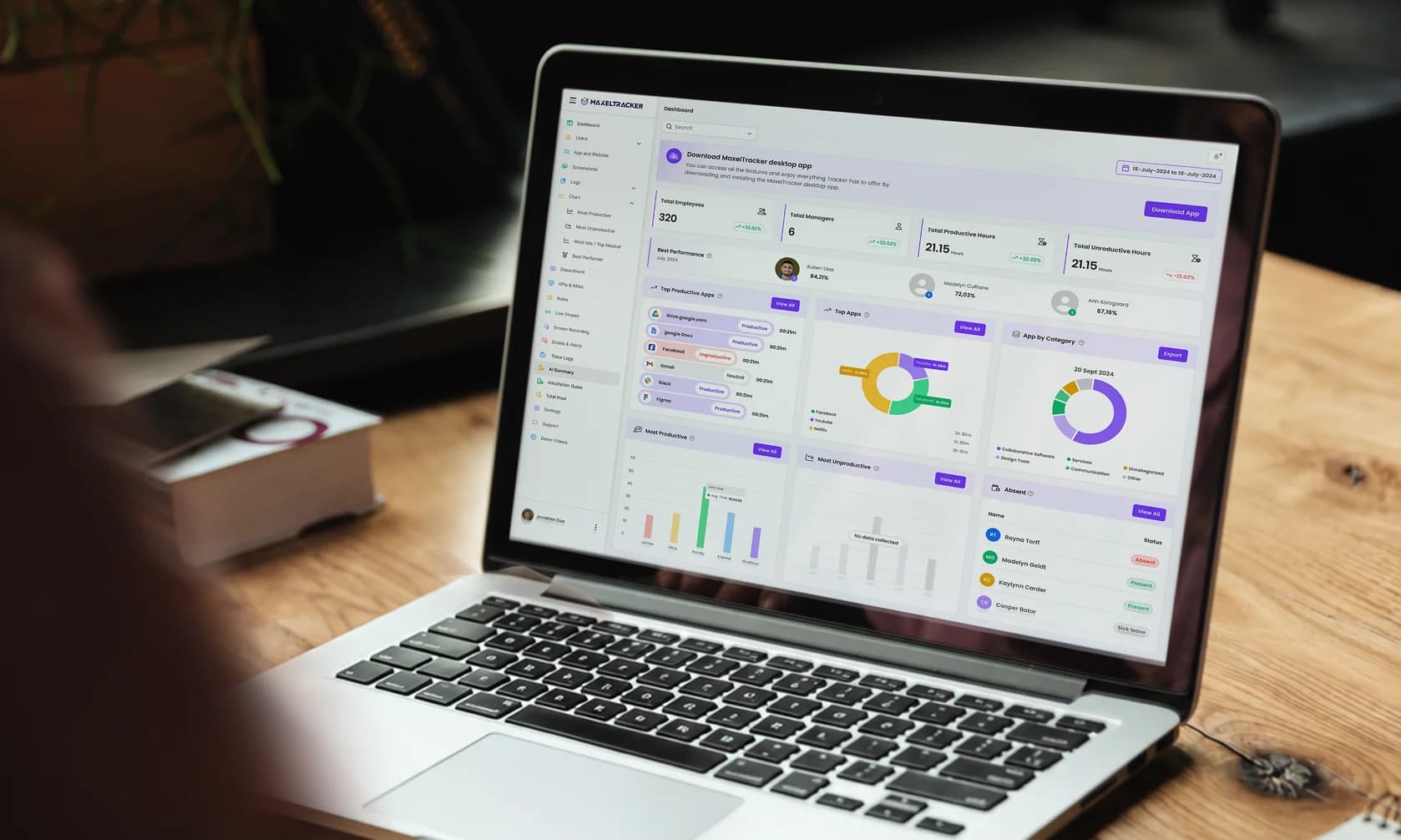
Workforce activity monitoring tools such as MaxelTracker can provide supplementary visibility into application and website usage and recorded work activity with live screen monitoring, helping managers review work patterns and support accountability. However, these capabilities should complement dedicated security monitoring and DLP solutions, not replace them.
Organizations should establish clear monitoring policies, apply appropriate access restrictions to collected records, and comply with applicable employee privacy requirements.
Even strong preventive controls cannot eliminate every security risk. Organizations need a documented plan for identifying, containing, investigating, and recovering from security incidents.
The plan should assign responsibilities, establish internal escalation procedures, and identify applicable notification requirements.
Maintain secure, regularly tested backups of critical information to support recovery from ransomware, system failures, or data destruction. Backups improve recoverability but cannot reverse the disclosure of information that has already reached unauthorized parties.
Regular exercises can help organizations test their readiness and identify weaknesses in their response procedures.

Understanding the difference between a data breach and a data leak helps organizations recognize security risks and respond appropriately. While a data leak primarily concerns the exposure or unauthorized disclosure of information, a data breach involves a security compromise that may affect the confidentiality, integrity, or availability of protected data.
Both incidents can result in financial losses, operational disruption, and damage to customer trust. Implementing strong access controls, data loss prevention solutions, employee security training, and effective incident monitoring can help businesses reduce these risks.
Ultimately, protecting sensitive information requires more than preventing cyberattacks. Organizations must also manage how data is accessed, handled, and shared across their workforce and business systems.


Built to Perform
Track team output in one dashboard.
4.8/5 Rating


